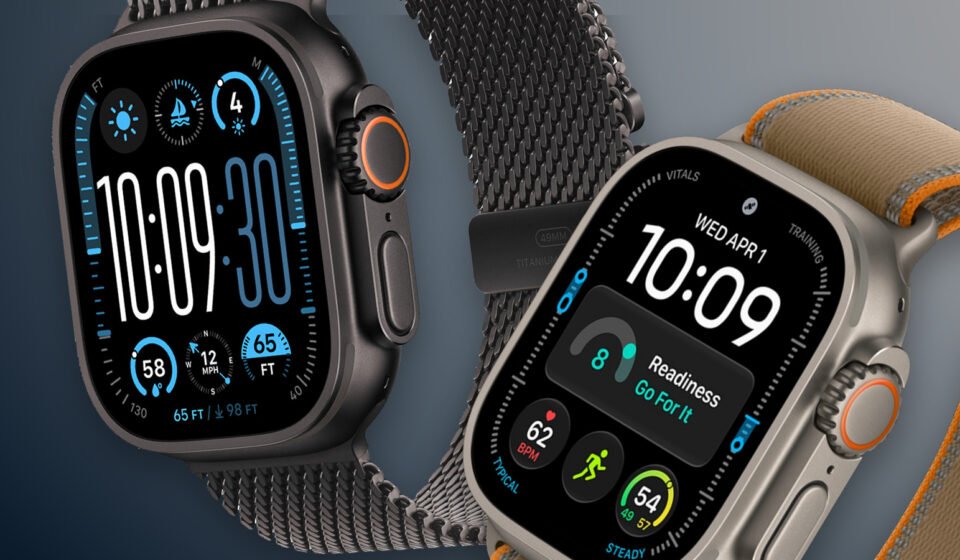

When Apple introduced the Apple Watch Ultra 4, it arrived three years after the Apple Watch Ultra 2. That gap matters for anyone weighing an upgrade or a first purchase, because the two watches look nearly identical on the outside while diverging sharply underneath.
MacRumors compared the two models and concluded that most Ultra 2 owners should hold onto their current watch if its battery still holds up. The publication identified the Health Sensing System as the strongest reason to upgrade, with the S11 chip, satellite connectivity, and longer battery life reinforcing the case. For buyers without a watch, the Ultra 2 remains a credible value at a refurbished price of $589, while the Ultra 4 starts at $799 in the United States.
Shared Design and Core Features
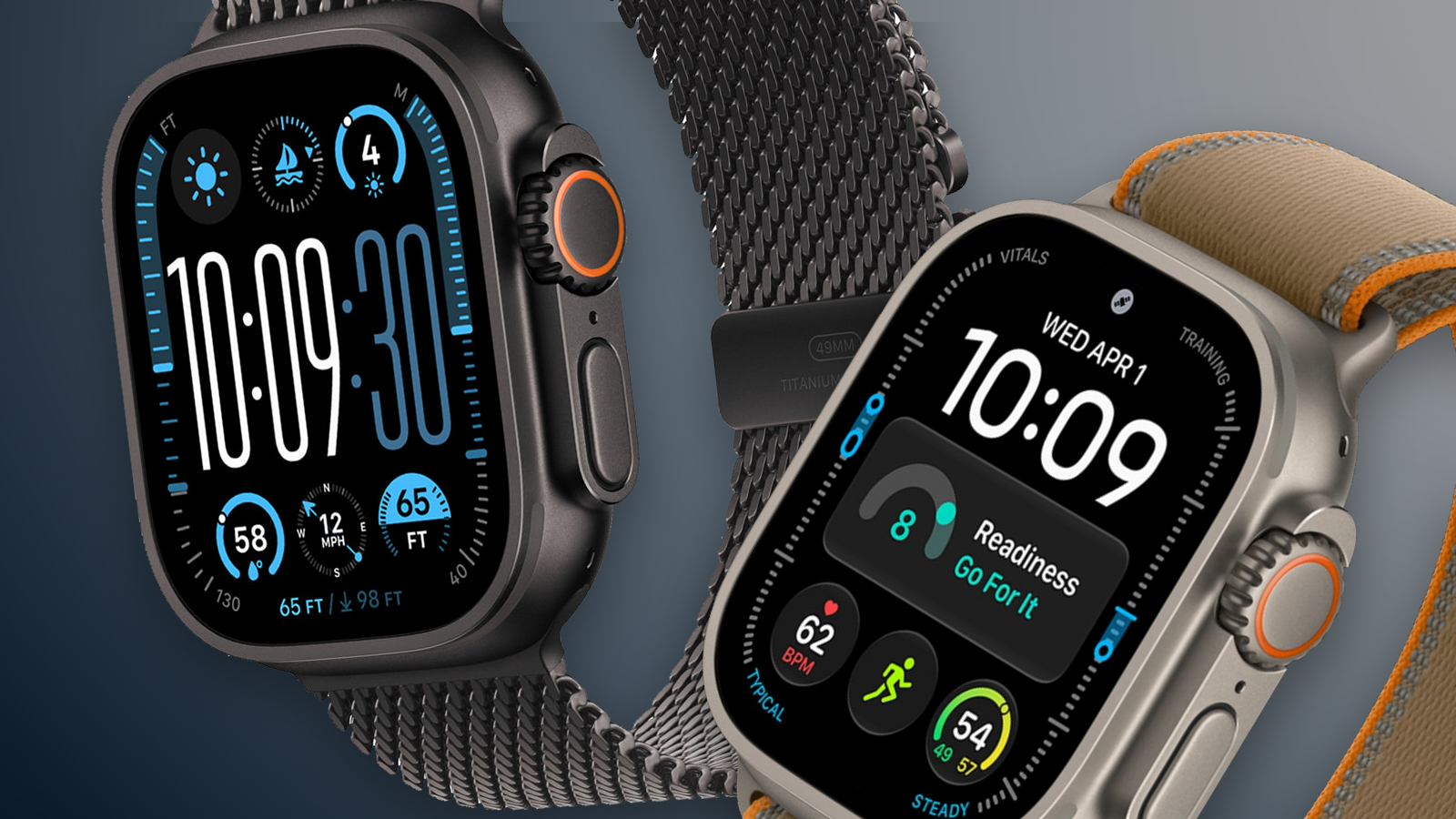
The two generations share more than a family resemblance. Both use a 49mm titanium case and include the Action button and the siren. The display on each reaches 3,000 nits of brightness, and both support dual-frequency GPS. Divers get the same 40-meter depth rating on either model.
That common ground means the Ultra 4 does not change the fundamental formula. It is still a large, rugged titanium watch built for outdoor use, and the Ultra 2 still carries the same core hardware identity.
Display: Slightly Bigger, Slightly Brighter in Motion
The Ultra 4 uses an LTPO3 OLED panel with 1Hz always-on refresh, while the Ultra 2 relies on LTPO2 OLED with always-on support. The newer display measures 422 by 514 pixels and covers 1,245 square millimeters. The Ultra 2 measures 410 by 502 pixels across 1,185 square millimeters. That works out to a 5% larger display area on the Ultra 4.
The difference is modest but real. It shows up in the resolution and the physical area, not in a dramatic redesign.
Chip, Memory, and What They Enable
The Ultra 4 runs on the S11 chip with 4GB of RAM. The Ultra 2 uses the S9 chip with 2GB of RAM. Doubling the memory gives the newer watch more headroom, and MacRumors noted that the S11 chip strengthens the upgrade case.
That extra capability feeds directly into features the Ultra 2 cannot match. The Ultra 4 tracks all-day steps more accurately and adds a Steps complication for the watch face. It also introduces Audio Intelligence, a set of features that includes Sound Recognition, music identification, Live Rewind, and Siri Recap. Sound Recognition alerts the wearer to surrounding sounds, while music identification automatically names songs. Live Rewind and Siri Recap are due later in 2026.
Health Sensing System: The Strongest Upgrade Reason
The Ultra 4 introduces a new Health Sensing System, and MacRumors singled it out as the most compelling reason to move up from the Ultra 2. The Ultra 2 relies on an electrical heart sensor and a third-generation optical heart sensor.
The Ultra 4 measures heart rate every five seconds, compared with background heart rate measurement on the Ultra 2. It also offers more frequent HRV readings and Recovery HRV. Where the Ultra 2 provides an overnight Vitals view only, the Ultra 4 adds a daytime Vitals view. It also includes the Readiness app.
Together, these changes shift the Ultra 4 from a device that logs overnight metrics to one that samples health data throughout the day.
Battery Life and Charging
Battery gains are among the most tangible differences. The Ultra 4 runs up to 50 hours in normal use, while the Ultra 2 reaches up to 36 hours. In Low Power Mode, the Ultra 4 stretches to 84 hours against 72 hours for the Ultra 2.
Workout tracking shows a similar split. The Ultra 4 handles up to 18 hours of standard outdoor workout tracking, compared with 12 hours on the Ultra 2. The Ultra 4’s Extended Workout mode reaches up to 25 hours with full GPS and heart rate, while the Ultra 2’s Low Power outdoor workout mode reaches up to 17 hours with full GPS and heart rate. At the top end, the Ultra 4’s Max Extended Workout mode lasts up to 45 hours with GPS every second, while the Ultra 2 manages up to 35 hours with fewer readings.
Charging is faster on the newer model as well. The Ultra 4 goes from 0% to 80% in about 45 minutes, while the Ultra 2 takes about one hour for the same charge.
Connectivity: Satellite and 5G Arrive
The Ultra 4 supports LTE and 5G cellular, while the Ultra 2 supports LTE and UMTS. The bigger addition is satellite connectivity, which the Ultra 4 brings for Emergency SOS, Messages, and Find My. That feature extends usefulness beyond cellular coverage.
GPS support differs slightly. The Ultra 4 handles GPS, Galileo, QZSS, and BeiDou. The Ultra 2 handles GPS, GLONASS, Galileo, QZSS, and BeiDou.
Weight and Software Support
The Ultra 4 weighs 63.0 grams in natural titanium and 63.1 grams in black titanium. The Ultra 2 weighs 61.4 grams in natural titanium and 61.8 grams in black titanium. The newer watch is slightly heavier, though the difference is small.
Software support keeps the Ultra 2 relevant. It supports watchOS 27 and Siri AI, and it continues to receive software updates. That means some features arrive on the older hardware through updates rather than requiring new sensors.
Should Ultra 2 Owners Upgrade?
For most Ultra 2 owners, the answer depends on battery health. MacRumors advised keeping the watch if the battery remains sufficient. The Health Sensing System is the strongest upgrade reason, followed by the S11 chip and doubled memory. Satellite connectivity and longer battery life add further justification.
Those who train long hours, travel beyond cellular coverage, or want more frequent health sampling have clearer reasons to move to the Ultra 4. Those whose Ultra 2 still lasts through the day have less pressure to switch.
Buying New: Ultra 4 or Refurbished Ultra 2?
New buyers face a straightforward trade-off. The Ultra 4 costs $799 and delivers the newest health sensors, the S11 chip, 4GB of RAM, satellite connectivity, 5G cellular, Audio Intelligence, a slightly larger display, and longer battery life. The Ultra 2 is discontinued but available refurbished from $589, which is $210 less than a new Ultra 4.
At that price, the Ultra 2 remains a credible value. It still offers the 49mm titanium case, Action button, siren, 3,000-nit display, dual-frequency GPS, and 40-meter dive support. It also supports watchOS 27 and Siri AI and continues to receive updates.
The strongest argument for choosing the Ultra 4 is future-proofing. The newer chip, additional memory, satellite connectivity, and expanded health sensing give it more room to absorb features over time. For buyers who keep a watch for several years, that longevity may justify the higher price. For buyers focused on cost, the refurbished Ultra 2 covers the essentials at a meaningful discount.