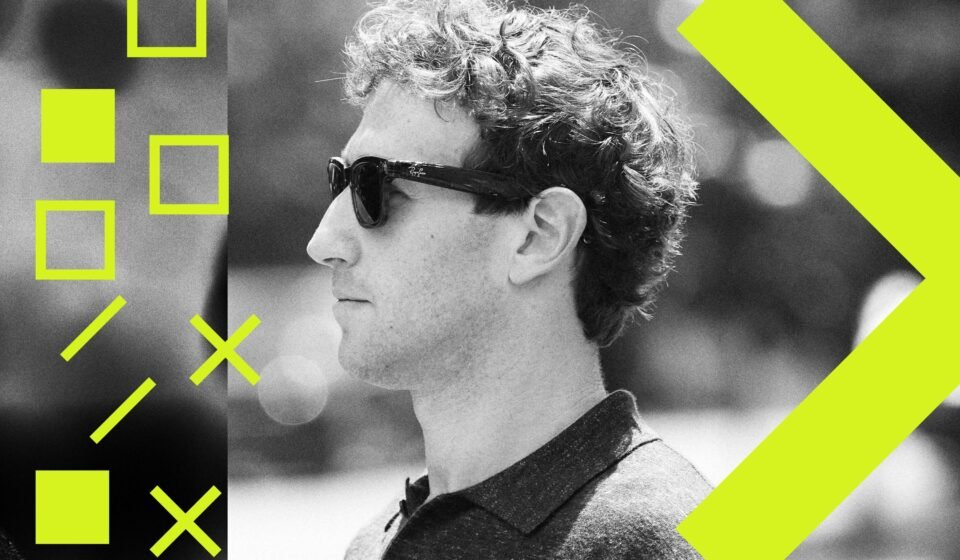

Meta’s Connect conference on Wednesday gave the company a stage for its latest products, including the Muse AI agent, which appears to be an early hit. But Mark Zuckerberg’s most revealing comments came away from the keynote stage. He sat down with Alex Heath on the Sources podcast after Meta declined an interview request from the Decoder podcast. Over the course of that conversation, Zuckerberg touched on privacy norms for Meta Glasses, the fallout from teen safety litigation, his split stance on regulating AI versus social media, the business model behind Muse, and the community promises attached to a massive data center project in Louisiana.
Meta Glasses and the Recording Light Problem

The recording indicator on Meta Glasses has become a flashpoint. The glasses capture passively, with a light signaling that recording is underway. Zuckerberg argued that phones also record people, and that Meta communicated the light clearly when the glasses launched years ago. He added that many millions of people now use Meta Glasses, and that the communication may have been missed or forgotten by some. He said Meta will communicate more about the recording light going forward.
That defense runs into a practical difference. Phone recording requires a visible physical action, while the glasses are designed to record passively. The tech industry has pushed for passive surveillance devices to be treated like phones, and social norms for smartphone recording evolved over time. Meta has also taken steps to down-rank Instagram videos that show harassment via the glasses. The question is whether a light and a down-ranking policy are enough to settle the privacy concerns, or whether the norms for wearable recording will take far longer to form.
Teen Safety: A Settlement and a Prisoner's Dilemma
Zuckerberg also addressed the teen safety settlement Meta reached. He said the company took teen safety issues seriously, and pointed to usage as evidence that people like Meta’s products. He noted that Meta publishes safety numbers and research, and argued that the company gets punished for transparency. By contrast, he said Apple does not publish similar numbers, pointing to Apple’s encrypted iCloud as an example of a service that does not disclose bad event numbers.
His sharper point was strategic. Zuckerberg said that limiting teen usage unilaterally hurts Meta, because teens may simply switch to TikTok. He described the situation as a prisoner’s dilemma and said he favors government regulation for social media teen safety, rather than a voluntary one-hour-per-day teen usage limit. The context is a legal fight in which Meta estimated a trillion-dollar liability in the teen safety case, and lawsuits have compared social media to Big Tobacco. Usage rates do not measure harm, which is why Meta wants industry-wide transparency rather than a solo standard. The open question is whether Zuckerberg’s call for regulation is a genuine concession or a way to level a playing field that currently penalizes the company for publishing more than its rivals.
AI Safety: Market Discipline Versus Regulation
Zuckerberg’s posture on AI safety is almost the inverse of his position on teen safety. In a post on X, he wrote about AI safety and the market. He said trust and alignment differentiate agents and models, and that labs face liability for harmful models. He also said Meta delayed Muse for several months for safety and security reasons, and that Meta did not ask others to delay first. For AI safety, he favors a market approach rather than government regulation, arguing that the market will kill unhelpful AI.
That leaves a tension worth following. Zuckerberg wants government rules for social media teen safety but market discipline for AI safety. He also said that if AI is not positive, it will not happen, and that consumer AI products are not yet good enough to overcome skepticism. The implication is that AI must prove itself in the market before regulation is needed. But the same logic could apply to social media, where usage is high despite the teen safety lawsuits. The difference may be that Meta sees itself as one of many AI labs, while it sees itself as uniquely exposed on social media safety.
Muse and the Aggregation Playbook
The Muse AI agent is an enterprise-focused product, unlike Instagram, which remains a beloved consumer app. Zuckerberg described the Muse business model as a small cut of transactions, with businesses potentially paying Meta rather than users. That fits the aggregation theory lens: Meta aggregates demand and then captures a small toll from the transactions that flow through its platform. Businesses downstream of aggregators tend to dislike them, which is a familiar dynamic for Meta.
Muse’s early traction is notable, but the business model raises questions. A small transaction cut can scale if volume is high, but it also depends on businesses accepting Meta as an intermediary. Zuckerberg said businesses may pay Meta, not users, which keeps the consumer experience free but puts the burden on merchants. Whether that model can sustain itself without alienating the businesses it depends on is an open question.
Data Centers, Louisiana, and the Transparency Gap
Zuckerberg also discussed the community benefits of data centers, citing Louisiana teacher bonuses of $50,000 funded by tax revenue from the Hyperion data center. Meta secured backroom deals for the Louisiana data center, and the New York Times reported on the negotiations. Meta received property tax exemptions as part of the arrangement.
The claim is that data centers bring tax revenue for the community. But the deal involved secrecy and backroom negotiations, which sits awkwardly with Zuckerberg’s broader argument that Meta gets punished for transparency. If the company wants credit for community benefits, the process by which those benefits were secured may matter as much as the checks that were written. The New York Times reporting suggests that the negotiations were not fully public, which makes it harder to evaluate whether the teacher bonuses are a model or an exception.
The Apple Problem and the Bypass Strategy
Underlying much of Zuckerberg’s product strategy is a desire to escape Apple’s platform fees. Apple’s App Store charges 30 percent fees, and Meta pays Apple 30 percent on boosted posts. Apple’s App Tracking Transparency hurt Meta’s ad business. Zuckerberg has pursued the Metaverse, glasses, and AI as attempts to bypass Apple, seeking to reduce reliance on a platform that takes a cut of Meta’s revenue and limits its advertising tracking.
That context helps explain why Meta is investing in hardware and AI agents. If Meta can build its own devices and its own AI ecosystem, it can route around Apple’s tolls. But the strategy is expensive and uncertain. The Metaverse has not yet delivered the escape Zuckerberg hoped for, and the glasses and AI efforts are still early. The question is whether Meta can build a platform that rivals Apple’s before Apple changes the rules again.
Open Questions for Zuckerberg
Zuckerberg’s interview covered a lot of ground, but it left several questions unanswered. On Meta Glasses, will more communication about the recording light actually change social norms, or will passive recording remain a step too far for many people? On teen safety, if Zuckerberg truly favors government regulation, what specific rules would Meta support, and would they apply equally to TikTok and YouTube? On AI safety, if the market will kill unhelpful AI, what happens if the market rewards harmful AI before it can be killed? On Muse, will businesses accept a small transaction cut, or will they look for alternatives? On data centers, will Meta disclose the terms of its Louisiana deal, or will the backroom negotiations remain the norm? And on Apple, can Meta’s bypass strategy succeed, or will the 30 percent fee continue to shape its business for years to come?
These are the follow-up questions that Zuckerberg’s remarks invite. The answers will determine whether his post-Connect interview is remembered as a candid explanation of Meta’s strategy or as a set of talking points that avoided the hardest trade-offs.