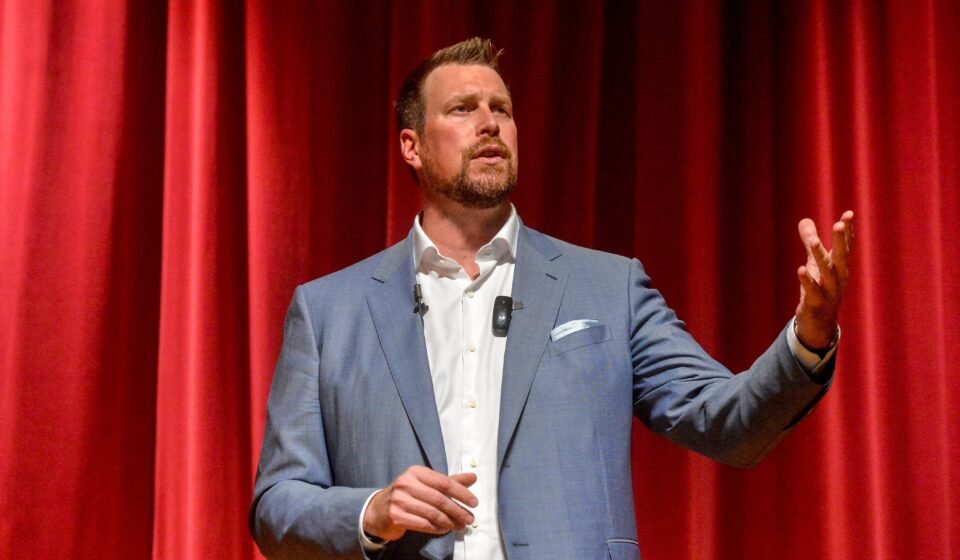

Ryan Leaf’s story is not just about football. It’s about a man who lost everything—his career, his freedom, his sense of self—and then, slowly and painfully, built something new. Today, Leaf works as the lead college football analyst for the Pac-12 on USA Network. He’s also a vocal advocate for mental health and substance-use-disorder recovery, partnering with the Menninger Clinic in Houston. But the path to this point was anything but straight.
A Career That Started with Promise

Leaf first made his name as a quarterback at Washington State. He led the Cougars to the 1998 Rose Bowl and was a Heisman Trophy finalist. That same year, the Indianapolis Colts selected Peyton Manning with the No. 1 overall pick in the NFL Draft. The San Diego Chargers took Leaf at No. 2. The expectation was that Leaf would become a franchise quarterback. Instead, his NFL career lasted just 25 games. He threw 14 touchdown passes and 36 interceptions. The failure was swift and brutal, and it was only the beginning of a long downward spiral.
In the years that followed, Leaf faced substance abuse, burglary and drug charges, multiple arrests, and a suicide attempt. In 2012, he was incarcerated in Montana. It was the lowest point of a life that had once seemed destined for greatness. But prison, as Leaf has since said, forced him to confront the person he had become. He couldn’t deflect responsibility anymore. He had to own his mistakes.
Rebuilding from the Ground Up

Leaf’s comeback didn‘t happen overnight. It started with small steps: acknowledging his addiction, seeking treatment, and learning to live with accountability. He now describes accountability not as a weakness, but as freeing. For years, he had believed that arrogance and invincibility were necessary for success. He thought showing vulnerability would make him look weak. Instead, that mindset kept him trapped. Recovery taught him a different way.
Today, Leaf says his grateful perspective is his superpower. He often tells audiences that mistakes don’t have to define a life. Sharing his worst moments, he believes, can help others. That’s why he speaks at recovery centers and rehab facilities before games. He talks to college teams, schools, community groups, and recovery organizations. Nick Saban first invited him to speak to the Alabama football team, and since then, the requests have kept coming. Leaf also works with the Menninger Clinic, a psychiatric treatment center in Houston, as an advocate. He participates in campus events and connects people to resources after his talks.
In August 2021, Leaf met Armando Colombo at Peyton Manning’s Hall of Fame induction. The two struck up a conversation as fathers, and that meeting eventually led to Leaf’s involvement with the Menninger Clinic. Colombo has said that Leaf relates to struggling people in a way few others can. He describes Leaf as genuine, transparent, and someone who gives people hope. Leaf also co-hosts the Recovery Playbook podcast with Daryl Shorter, which combines medical expertise with lived experience.
A New Voice in the Booth

Leaf’s broadcasting career has mirrored his personal recovery. He previously worked for ESPN, the Pac-12 Network, and CW Sports. At CW Sports, he partnered with veteran play-by-play announcer Ted Robinson. The two called games together for two seasons. Robinson had actually called Leaf’s games at Stanford years earlier, so their reunion was a full-circle moment. Robinson praises Leaf’s direct, simple analysis. He says Leaf’s real comeback was in the life he built, not in football. Robinson also remembers how Leaf would call his wife and children before every game. He says Leaf would beam with joy during those calls.
Now, Leaf is paired with Nate Gatter and Lauren Green on the Pac-12’s USA Network broadcasts. He helped Gatter get the play-by-play job, and the two have developed a close friendship. Leaf even hosted Gatter and his wife at his Connecticut home. Gatter says Leaf has experienced extreme highs and lows, and that he is transparent and honest. He also jokes that Leaf lives with opinions rooted in 1999. Leaf keeps broadcasts loose and humorous, and he’s occasionally compared to Will Ferrell. But he bristles at being labeled solely a redemption story. He says he is not a dumb jock calling only his sport.
Leaf will also call basketball broadcasts, a role he credits his wife, Anna Kleinsorge, with negotiating. He previously called Fordham games. For Leaf, the opportunity to work on USA Network means a great deal. He says the network believed in him before he did. He also sees a parallel between the Pac-12’s rebuilding and his own journey. The conference nearly disappeared after 10 of its 12 members departed, leaving only Washington State and Oregon State. But it has since rebuilt with nine members entering the 2026 season, and football is the centerpiece of its relaunch on USA Network. Leaf says both he and the conference share a theme of redemption.
Recovery as a Daily Commitment

Leaf is quick to point out that recovery is not a one-time achievement. It’s a daily commitment, an ongoing process of learning and evolving. He says standing in the broadcast booth sometimes reminds him of his prison cell—a stark reminder of how far he’s come. But he wouldn’t trade his journey for a successful NFL career. He says he would have no purpose if he were only a good football player. Instead, he now has a platform to help others. He describes himself as the luckiest guy in the world.
His message is simple: addiction is a treatable disease, and mental health struggles should not be stigmatized. He speaks to patients, law enforcement, families, and healthcare professionals. After one speaking engagement, he helped a young man who was struggling. Leaf’s name may be in the room before he is, but he uses that recognition to open doors for others. He says his superpower is a grateful perspective—one that came only after he lost almost everything.
As the Pac-12 enters a new era, Leaf will be there to call the games. But his real work happens off the field. Whether he’s talking to a college team or a group of patients, he carries a message of hope. His life is proof that a person’s worst moments don’t have to be the final word.