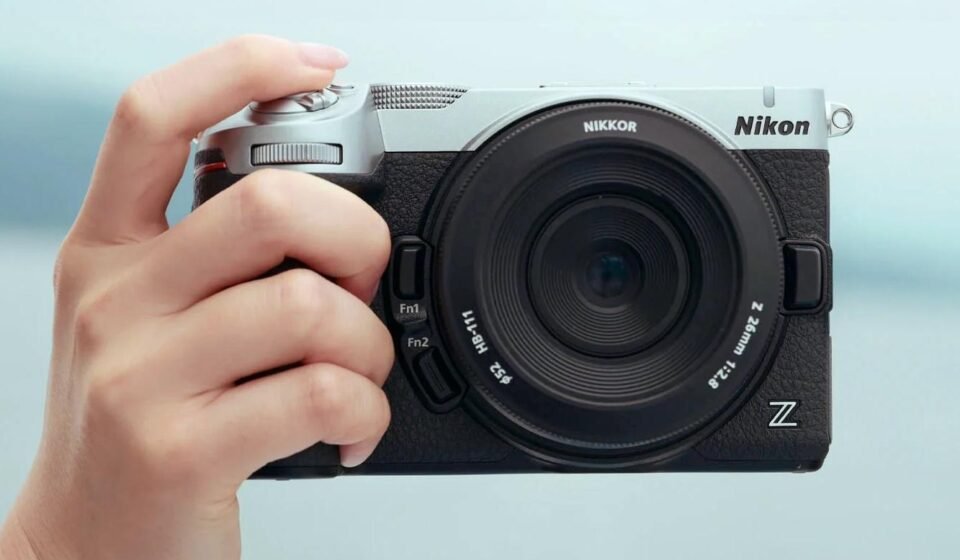

Nikon has introduced the Z5 IIC, a full-frame mirrorless camera that strips features out of the Z5 II in order to reach a lower price. The announcement came on September 24, 2026. Rather than building on the Z5 II with new capabilities, the Z5 IIC is defined by what it leaves behind.
A Lower Entry Point for Full-Frame

The Z5 IIC is priced at $1,399.95, which is $450 less than the $1,849.95 Z5 II. Nikon is positioning the camera for novice photographers, and the company has kept the components that matter most for quality while cutting the ones that add cost without changing the pictures.
The Z5 II itself arrived last year, following a five-year gap after the original Z5. That update cycle gives the Z5 IIC a recent foundation to work from, and Nikon is now using that foundation to serve a more budget-conscious buyer.
What Carries Over From the Z5 II

At the center of the Z5 IIC is the same 24.5-megapixel backside-illuminated full-frame sensor found in the Z5 II. The camera also uses Nikon’s EXPEED 7 processor, and it includes in-body stabilization. Those three elements form the core of the shooting experience, and their presence means the Z5 IIC is not a stripped-down sensor or a slower pipeline.
Shooting speeds remain competitive as well. With the electronic shutter, the Z5 IIC can capture JPEG images at up to 30 frames per second. It also offers pre-capture, which begins recording up to one second before the shutter button is pressed. When the mechanical shutter is used, the camera reaches up to 15 frames per second in JPEG.
The Features That Were Removed

The most visible omission is the viewfinder. The Z5 IIC has neither an electronic viewfinder nor an optical viewfinder, so framing is done entirely through the rear screen. That screen is a 3.2-inch articulated touchscreen, which allows it to be angled for different shooting positions. Its resolution is 1.04 million dots, compared with 2.1 million dots on the Z5 II, meaning the Z5 IIC’s display offers roughly half the detail of its more expensive sibling.
Storage has also been simplified. The Z5 IIC has a single UHS-II SD card slot, so there is no second card for redundancy or overflow. And the joystick used on the Z5 II for selecting autofocus points is gone. Instead, navigation is handled by a multi-directional controller.
Nikon has given the Z5 IIC a refreshed design, so the changes are not limited to internal specifications. The camera is still built around the same sensor and processor, but the body and controls reflect the more affordable position in the lineup.
How It Compares With the Canon EOS R8 Mark II

The Z5 IIC enters a full-frame market where Canon offers the EOS R8 Mark II at $1,899. That camera is $499 more expensive than the Z5 IIC. One notable difference is that the Canon EOS R8 Mark II lacks a mechanical shutter, while the Z5 IIC includes one and can shoot up to 15 frames per second in JPEG with it.
For a novice photographer comparing full-frame options, the Z5 IIC’s price sits below the Canon competitor while retaining the mechanical shutter. The trade-off is the missing viewfinder and the reduced screen resolution, which are the kinds of features that matter more to some shooters than others.
The Trade-Offs Behind the Price
The Z5 IIC is not a replacement for the Z5 II. It is a parallel option for buyers who want the sensor, processor and stabilization of the Z5 II but do not need a viewfinder, a high-resolution screen, dual card slots or a joystick. By removing those elements, Nikon has created a full-frame camera at $1,399.95 that keeps the pipeline intact.
For anyone weighing the two models, the decision comes down to which features are essential. The Z5 II offers the viewfinder, the sharper screen and the additional control points. The Z5 IIC offers the same core imaging hardware for $450 less, with the understanding that framing, review and navigation will rely on the rear touchscreen and the multi-directional controller.
The announcement on September 24, 2026, makes the Z5 IIC Nikon’s most affordable route into the current full-frame mirrorless system, provided buyers can live without the features that were left out.