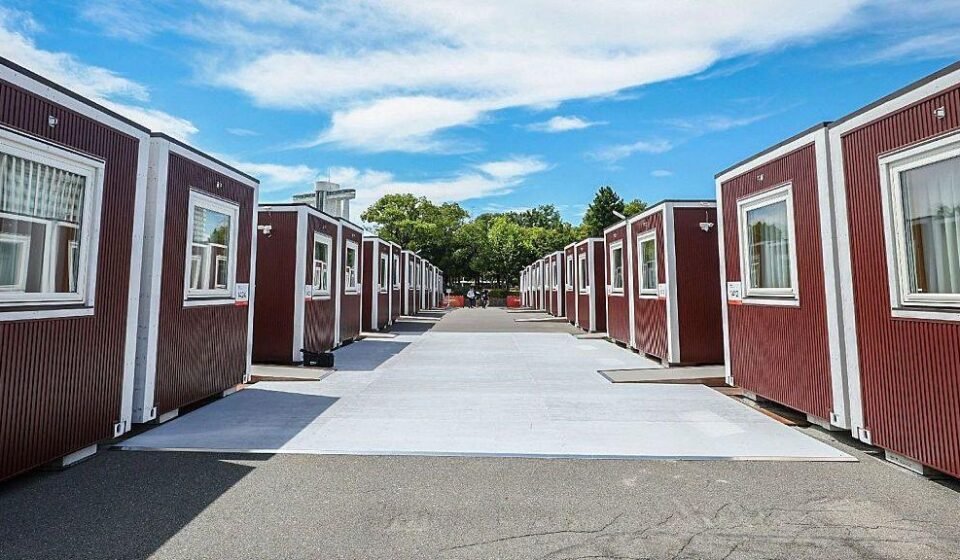

When the Asian Games officially open on Saturday in Nagoya and Aichi prefecture, Japan, more than 17,000 athletes and officials will be on hand. But for about 2,000 of them, home for the duration will be a wooden container hut—a temporary structure that has become the center of a growing controversy.
Not Exactly a Warm Welcome

The huts were designed with a dual purpose: house athletes now, then serve as evacuation facilities during disasters later. On paper, that sounds practical. In practice, athletes are finding the quarters far from comfortable. The most common gripe? Beds that are too short for anyone over two meters tall. Jung Jae-yong, vice-president of the Korea Basketball Association, didn’t mince words, calling the setup the worst accommodation he’s ever seen at a major event. He also noted that taller players simply can’t stretch out.
It’s not just about bed length. A member of the South Korean basketball team posted a video showing a leaking pipe and a soaked floor, along with a plea for help. That same athlete was among those briefly evacuated last week when record rainfall hit Nagoya, flooding the area and forcing a temporary exit from the containers.
The problems aren’t confined to the huts. Water leakage has also been reported at some competition venues, adding to the sense that preparations have been rushed.
Other Teams Share the Pain

South Korea isn’t alone in its frustration. Jung mentioned that representatives from other countries have voiced similar concerns. The Philippine Olympic Committee president, Abraham Tolentino, offered a more mixed : he said Filipino athletes do have beds, but some officials and coaches have been placed in different hotels and even Airbnb rentals.
Indian authorities took a proactive step, building replicas of the container huts so their athletes could get used to the cramped conditions before arriving. That’s a workaround, not a solution.
Yuta Matsuo, the accommodation manager, acknowledged that organizers are aware of the dissatisfaction. He said concrete steps are being taken to improve the athlete environment, though he didn’t specify what those steps are.
A Numbers Game Gone Awry
The root of the problem seems to be a classic planning mismatch. Organizers initially expected 15,000 athletes and officials. That number was already baked into the budget and staffing plans. But in mid-August, the expected headcount jumped to about 17,000 after teqball and padel were added to the program. Hideaki Omura, president of the organizing committee and governor of Aichi Prefecture, was blunt: there was no manpower or budget to handle the extra athletes. He said those still coming would have to make their own arrangements.
To ease the squeeze, organizers turned to an Italian cruise ship, which docked in Nagoya on Tuesday. It will house between 4,000 and 5,000 participants. The remaining attendees are staying in hotels. Organizers and the Olympic Council of Asia insist that all 17,000-plus registered athletes have been given Games-appropriate accommodation, and that preparations are on track. The registration deadline was in July, and everyone who met it is supposedly covered.
A Different Kind of Games Village
Unlike the Olympics, which typically features a dedicated athletes’ village, the Asian Games often rely on temporary housing. That approach can work, but it leaves little room for error—or for a sudden influx of extra people. The container huts were meant to be a clever, reusable solution. Instead, they’ve become a symbol of the logistical headaches that come with hosting a mega-event on a fixed budget.
Basketball and football matches have already begun, so the Games are underway in all but name. As the opening ceremony approaches, the focus will inevitably shift to the competitions. But for the athletes sleeping in container huts, the discomfort is a daily reality that won’t disappear when the torch is lit.
The Games run until October 4. Whether the promised improvements materialize—and whether they arrive in time to matter—remains to be seen.