
Nearly four and a half years have passed since World Athletics became the first major international sports federation to shut its doors on Russian and Belarusian competitors. That decision, taken in March 2022 after Russia’s invasion of Ukraine, has outlasted the initial shockwaves and the subsequent realignment across much of the Olympic movement. While wrestling, judo, fencing, and World Aquatics have all loosened their restrictions, track and field’s governing body has not budged. And its president, Sebastian Coe, wants the world to understand that this is not a matter of stubbornness or personal animus.
A Philosophical Stance, Not a Personal One

Speaking to Euronews, Coe framed the continued exclusion as a principled position rooted in the responsibilities of a federation. “Fighting for integrity and the authority to determine eligibility is philosophical, not personal,” he said, adding that World Athletics will maintain and defend its stance. The British Olympic champion, who won four medals across the 1980 Moscow and 1984 Los Angeles Games, has led the organisation since 2015, when he was elected in Beijing. Back then it was still called the IAAF; the rebrand to World Athletics came in 2019. His third and final term expires in 2027, with a successor to be chosen in Beijing — a neat bookend to a presidency that has now spanned twelve years.
That length of tenure is itself a statement. Coe initiated a change to the federation’s statutes specifically to prevent life presidencies, a move that underscores his stated commitment to governance reform. It is a theme he returns to often. According to the ASOIF Governance Review, World Athletics is the best-governed sport in the Olympic movement, Coe claims. He also points out that it is the only Olympic sport with a gender balance council — a 26-member body split evenly, 13 men and 13 women. These are the credentials he offers when challenged on why his federation should be trusted to make a call that others have reversed.
Moscow's Counterargument: Obsession, Not Policy

The Russian Athletics Federation sees things very differently. Its executive director, Boris Yarisevsky, has characterised the ban as Coe’s personal obsession rather than a collective decision of the federation. He calls the sanctions unprecedented and argues they inflict particular harm on Russian athletics, especially at the youth level. The federation has taken its case to the Court of Arbitration for Sport in Lausanne, filing two appeals during the summer of 2025. More recently, last week, Russian athletes appealed to the International Olympic Committee and to a UN human rights commission, broadening the pressure beyond the courtroom.
The backdrop to this legal offensive is a shifting landscape. In the summer of 2025, the IOC eased its own restrictions, effectively handing the question of Russian participation back to individual federations. Several have taken the opportunity to reintegrate Russian athletes under various conditions. World Athletics, by contrast, has held firm. Coe’s position is that eligibility is a federation matter, and that his organisation has both the right and the duty to set its own criteria. It is a defence that leans heavily on the concept of autonomy — the idea that sports bodies, not governments or courts, should decide who competes.
Budapest as a Showcase for a Different Vision

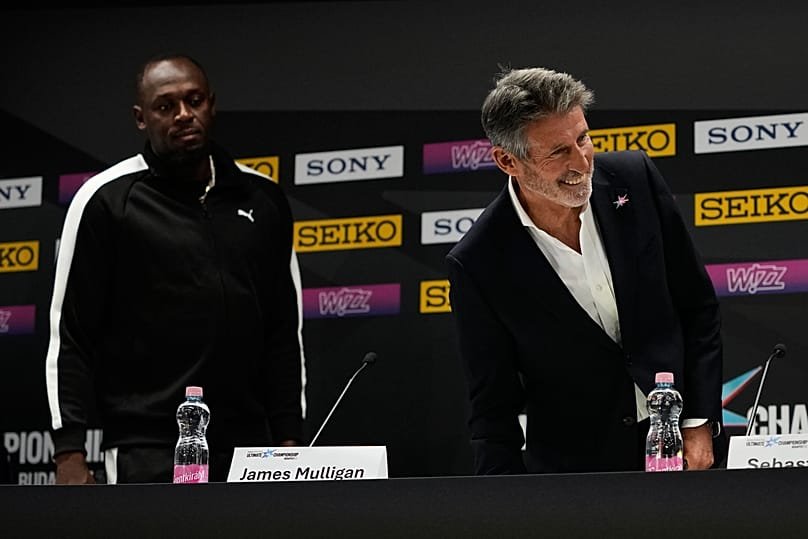
While the legal battles grind on, Coe has been busy promoting an alternative vision for the sport. Last weekend, Budapest hosted the Ultimate Championship, a new event with a prize pool of $10 million and a field of 381 athletes from 65 countries. The format is deliberately leaner than a world championships: fewer competitors, bigger rewards. Coe describes it as a strong legacy and notes that the sport now looks different, with prize money far larger than in the past. He believes the lessons from Budapest can inform both future world championships and the Olympic programme.
The event also served as a reminder of Coe’s broader ambitions — and their limits. He lost the 2025 IOC presidential election to Kirsty Coventry, a defeat that closed one avenue for extending his influence. Asked about other sports or organising committees, he is dismissive: he has no interest in them. His focus, he insists, remains on athletics and on the council he leads. “The council is accountable and responsible,” he said, a line that reads as both a defence of his own record and a subtle rebuke to those who might prefer a less confrontational approach.
Governance Under a Wider Lens

The timing of Coe’s remarks is not accidental. Global sports governance is under scrutiny on multiple fronts. FIFA president Gianni Infantino has faced criticism over his leadership style, and the resignation of Edgar Grospiron as head of the 2030 French Alps Winter Olympics organising committee has added to the sense of turbulence. Coe declined to comment on either figure, a silence that speaks as loudly as any statement. He is clearly aware that the spotlight is on how sports leaders wield power, and he is positioning World Athletics as a model of restraint and transparency.
That positioning is not without its contradictions. The ban on Russian and Belarusian athletes remains a hard line that some see as inconsistent with the principle of sport as a bridge-builder. Yet Coe’s argument is that integrity and fairness cannot be sacrificed for the sake of participation. He points to the athletics integrity unit, which handles drug testing and integrity programmes, as evidence that World Athletics takes its responsibilities seriously. For him, the exclusion is not a punishment but a necessary condition for the credibility of competition.
As the CAS appeals wind their way through Lausanne and the UN human rights commission weighs the athletes’ plea, the standoff shows no sign of resolution. Coe’s term ends in 2027, but the policy he has championed may well outlast him. The question now is whether other federations will follow his lead or continue to drift away. For the moment, World Athletics remains an outlier — and its president seems perfectly comfortable with that.