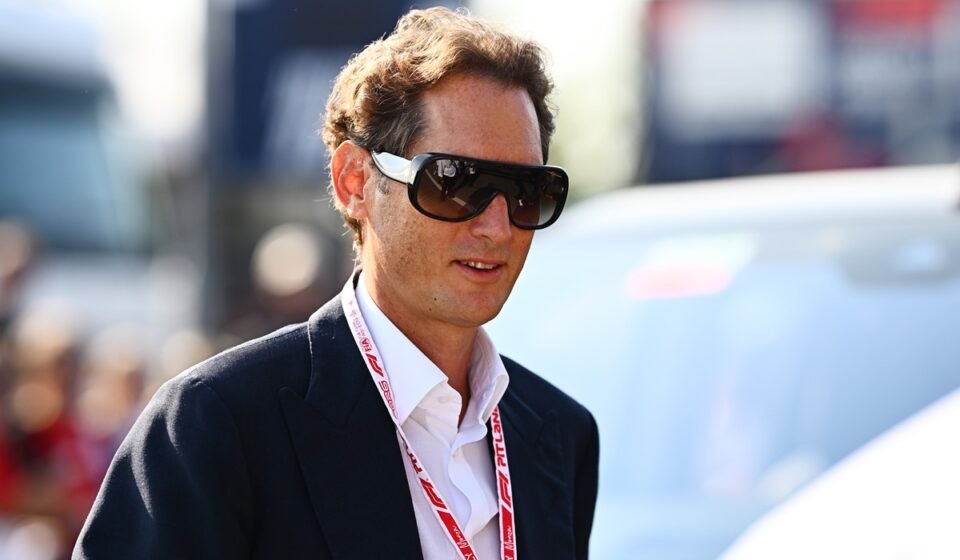

John Elkann’s expanding influence over Juventus has drawn pointed criticism from a former club president, who argues that the man at the top of the family business should step back from day-to-day football decisions and let a board of directors run the club.
Giovanni Cobolli Gigli, who once held the Juventus presidency, used an interview with Calciomercato to question whether Elkann’s hands-on approach is the right model for a publicly traded company. His remarks landed as the club continues to search for stability after a turbulent period that began with the resignation of Andrea Agnelli and the board amid financial scandals.
Elkann steps deeper into Juventus affairs

Since Agnelli’s departure, Elkann has become a far more visible and active figure in Juventus operations than he was during his relative’s presidency. The brief record of his tenure shows a series of sweeping personnel decisions: managers, sporting directors and support staff have all been changed. The turnover has not produced the calm that the club has been seeking, and Juventus remain unstable despite the reshuffling.
The instability has been compounded by a poor start to the current season, which has kept scrutiny fixed on the sporting project. Elkann personally backed the appointment of Luciano Spalletti as permanent manager, but the possibility that Spalletti could be replaced has already surfaced, a sign that the club’s direction remains unsettled.
Elkann’s dual role complicates the . He oversees the family business and carries several commitments tied to that position, yet he also dedicates significant time to Juventus. That combination has made him the central figure in the club’s decision-making, even though Juventus is a publicly traded company with a board of directors that is supposed to handle management.
Cobolli Gigli: shareholder, not manager

Cobolli Gigli’s critique rests on a distinction he believes has been blurred. In his view, Elkann is a shareholder in a publicly traded company, and that role should define the limits of his involvement. The former president said Elkann must remain a shareholder, put men on the board of directors, and then make sure that Juventus managers are allowed to do their work.
He described the media’s persistent focus on Elkann as conceptually wrong. Newspapers bringing up Elkann’s name in the context of operational decisions, Cobolli Gigli suggested, misunderstand how a publicly traded club should be governed. The board, not the shareholder, should manage Juventus, he argued.
That position does not mean Cobolli Gigli sees no value in dialogue. He acknowledged that discussion between a coach and managers can be useful, but he also pointed to possible problems with game setup. His broader concern is structural: when a shareholder becomes the face of managerial decisions, the governance model suffers.
Transfer spending under the microscope
Cobolli Gigli also turned his attention to the transfer market, where he said purchasing campaigns have failed. Too much money has been spent, in his assessment, without the results that would justify the outlay. The criticism echoes the wider frustration around Juventus, where heavy investment has not translated into a settled or successful team.
The transfer concerns are tied to the broader question of who is accountable. If the board is meant to manage the club, then transfer strategy should be the board’s responsibility. If the shareholder is making the calls, then the lines of accountability become unclear. Cobolli Gigli’s comments suggest he sees the current arrangement as the latter, and he does not believe it is working.
Spalletti’s position and the search for stability
Spalletti’s appointment was meant to bring a measure of certainty. Elkann backed him as permanent manager, a decision that signaled the shareholder’s direct engagement with the sporting side. But the possibility of another change has already emerged, leaving Spalletti’s job security in question and adding to the sense that Juventus are still lurching from one decision to the next.
For Cobolli Gigli, the problem is not any single appointment but the pattern. Managers, sporting directors and staff have changed, yet the club has not stabilized. A poor start to the current season has reinforced the impression that the changes have not addressed the underlying issues.
A governance question that will not go away
Elkann remains closely involved with Juventus, and there is little indication that he intends to retreat. His influence is likely to remain a talking point as long as the club’s results and internal structure continue to attract attention. The debate Cobolli Gigli has opened is not merely about one man’s role; it is about how a publicly traded football club should be run.
The former president’s answer is clear: the shareholder should own, the board should manage, and the managers should be left to work. Whether Juventus will move toward that model, or continue with Elkann at the center of decisions, is a question that will shape the club’s next chapter.