

For the first time, Apple’s long-cancelled Copland operating system can be run in a web browser. Michael Steil, a specialist in reverse-engineering vintage hardware and software, modified the open-source Power Mac emulator DingusPPC to boot the system. The browser version is available on his website, and he has shared the patches required to get it running.
What Was Copland?
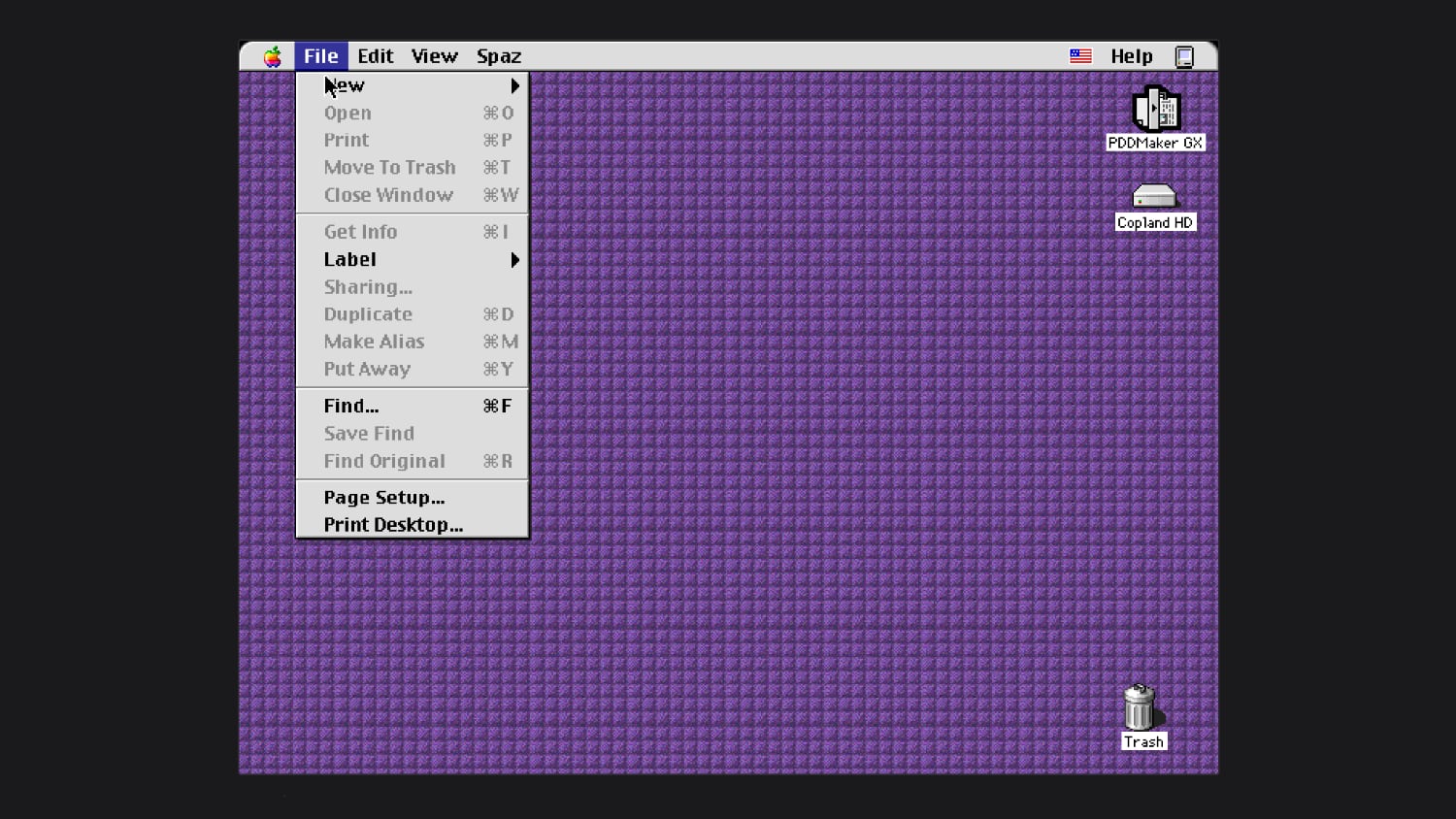
Copland was an Apple operating system project that took shape in the mid-1990s. It was announced publicly, but it never reached commercial release. The project was undone by management problems and feature creep, and Apple officially cancelled it in August 1996.
During its development, Apple released three beta versions. The last of these was D11E4. Some pieces of Copland eventually found their way into Mac OS 7.6 and Mac OS 8, but the full system remained unreleased.
Running Copland on original hardware was notoriously difficult. Steil has noted that the system was hard to run on real machines, which helps explain why it had never been made available in emulation before his work.
How the Emulation Was Achieved
Steil’s achievement rests on DingusPPC, an open-source emulator for Power Mac systems. He modified the emulator so that Copland could boot, a process that required 11 patches. According to Steil, it took those 11 patches to get Copland running.
He concentrated on the final beta, D11E4, and succeeded in getting that version operational. The patches he used have been shared, making it possible for others to reproduce the setup. The result is a browser-based version of Copland, hosted on Steil’s website, which allows anyone to try the abandoned OS without hunting down rare hardware or configuring an emulator from scratch.
Why Copland Mattered
The cancellation of Copland had consequences that reached far beyond the project itself. After shelving Copland, Apple went looking for an operating system from outside the company. In 1997, Apple purchased NeXT, bringing Steve Jobs back to Apple. NeXTSTEP, the operating system developed at NeXT, became the precursor to Mac OS X.
That chain of events means Copland sits at a turning point in Apple’s history. It was the company’s own attempt at a next-generation Mac OS, and when it failed, the company turned to an outside acquisition that reshaped its software future.
How to Try Copland in a Browser
The browser version of Copland is available on Steil’s website. Because it runs through a modified DingusPPC emulator, no local installation is required. The patches Steil used to boot the system have also been shared, so those who want to study or replicate the emulation can do so.
For anyone interested in the history of Apple’s operating systems, the browser emulation offers a direct way to see a piece of software that was announced but never sold, cancelled in 1996, and partially absorbed into later Mac OS releases. It is a rare look at a path Apple did not take, made accessible through a modern web browser.


