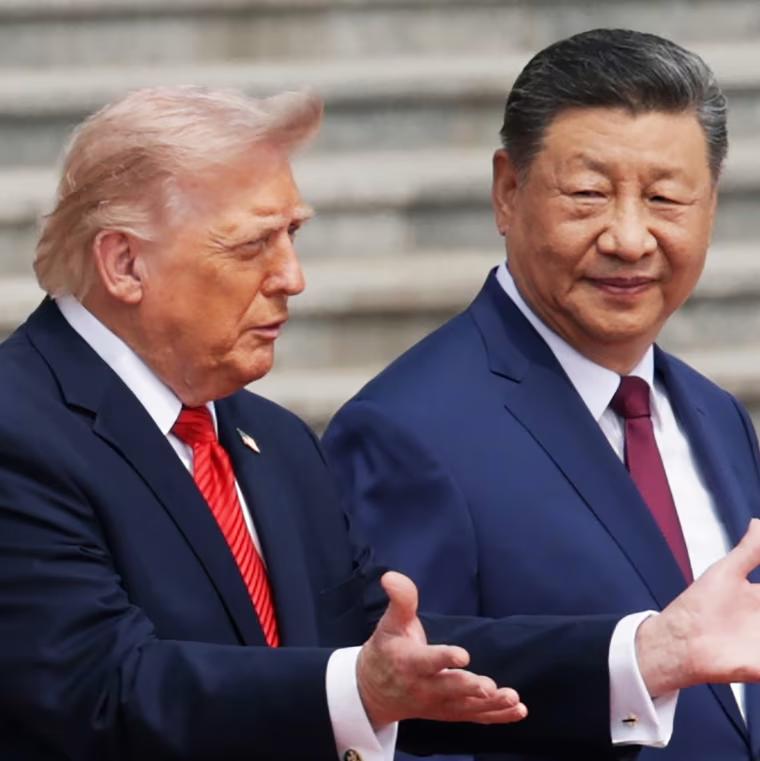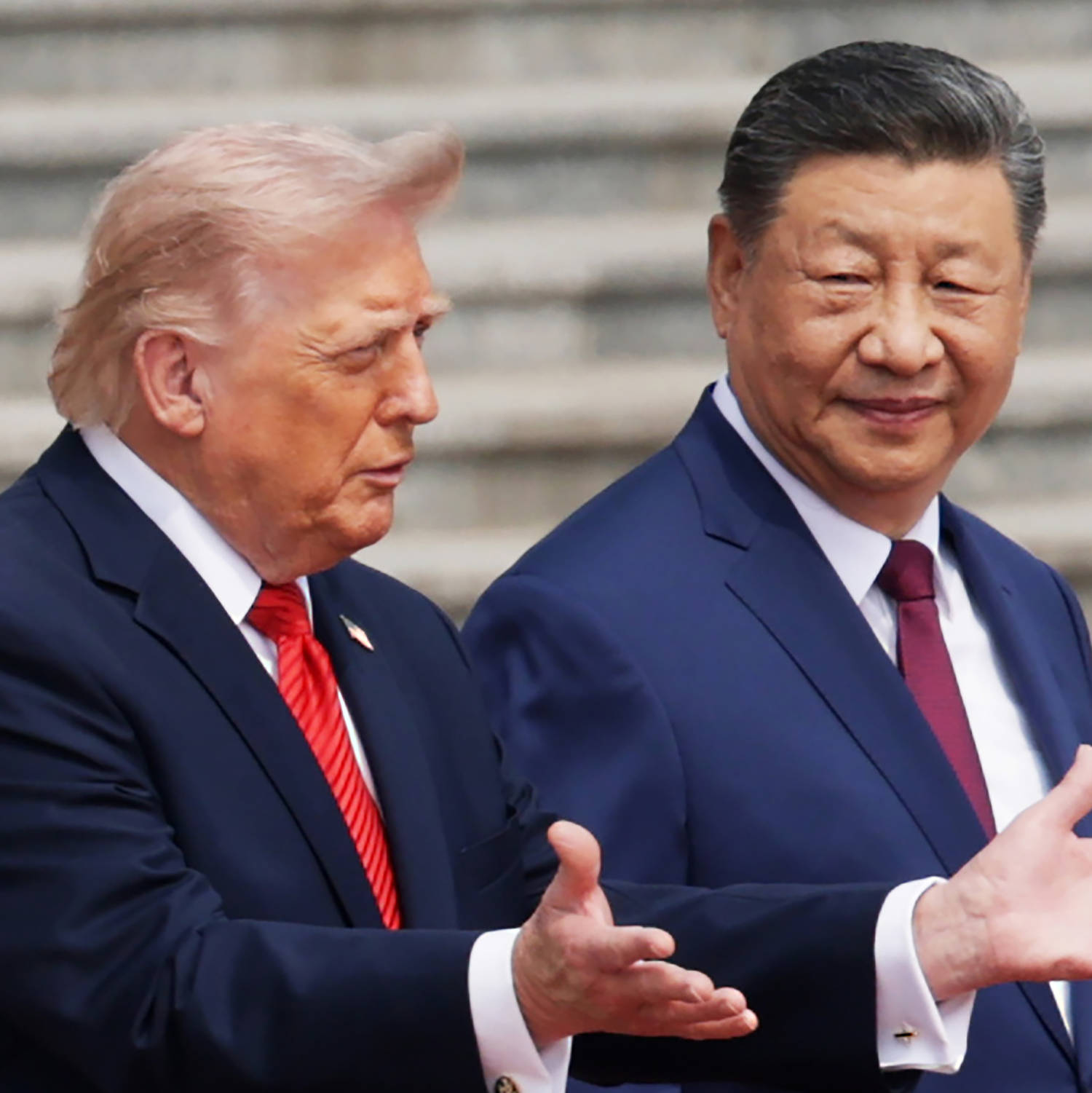

When President Donald Trump and Chinese leader Xi Jinping sit down in Washington next week, artificial intelligence will be high on the agenda. But the two powers remain far apart on how to manage the risks of a technology both see as central to their national security.
A Relationship Stuck in Distrust

Both Washington and Beijing acknowledge that AI carries dangers—from autonomous weapons to the potential for catastrophic accidents. Yet efforts to collaborate on safety have been frozen by a deepening rivalry. The two countries agreed in May to hold high-level talks on AI, but as of now there has been no public confirmation that those discussions will take place before Xi’s visit.
The impasse reflects a fundamental disconnect. American officials and tech leaders often frame AI safety as an existential concern, warning that rapid development could outpace human control. Trump himself has dismissed such worries as a “hoax,” while simultaneously insisting that the US must maintain dominance through export controls on advanced chips and other technologies.
China, for its part, regulates AI heavily but avoids the apocalyptic language common in the West. Instead, Beijing focuses on ensuring that AI serves the Communist Party’s vision of stability and socialist values. Chinese officials view US calls for slowing down as a tactic to hobble China’s progress. They point to America’s own aggressive export controls as evidence that the goal is not safety but supremacy.
Competing Visions of AI Governance

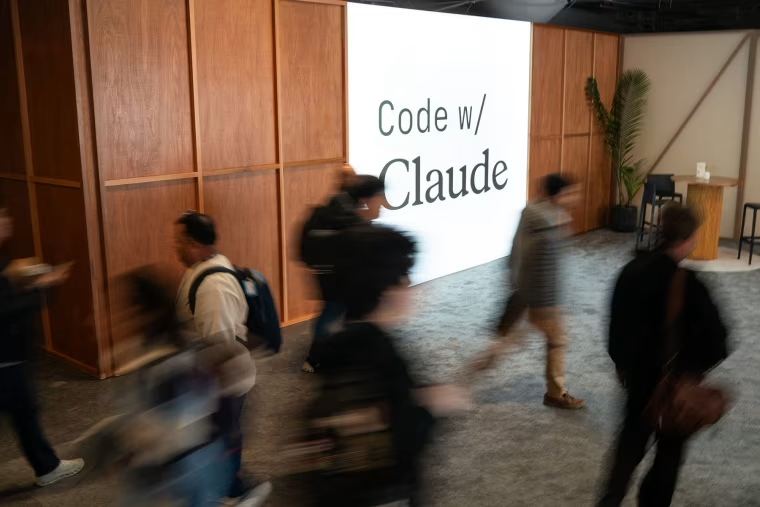
At the heart of the tension are two incompatible approaches. The United States accuses Chinese AI companies of illicitly distilling American models—essentially extracting capabilities from US systems without permission. A recent report from Anthropic, the US AI firm, claimed that Chinese labs routed requests through its Claude models, sometimes including sensitive information. Chinese officials counter that distillation is a conventional technique and accuse US executives of trying to stifle competition.
China, meanwhile, promotes open-weight AI as a global public good. At a BRICS summit in India on Sunday, Xi offered to help the 11-member group with open-source AI and urged members to join China’s AI governance initiative. He also said AI must remain under human control—a message he first delivered at a Shanghai conference in July.
But China’s domestic rules are anything but open. Companies must file algorithms with the government, undergo security assessments, watermark AI-generated content, and train models on data that conforms to Chinese values. The state also restricts AI companions over mental health concerns and bars some citizens with tech security backgrounds from leaving the country.
Chen Yixin, China’s minister of state security, warned Sunday that hostile forces are misusing generative AI to spread rumors and foment confrontation. He called for greater party control and oversight of the technology.
Why Cooperation Remains Elusive

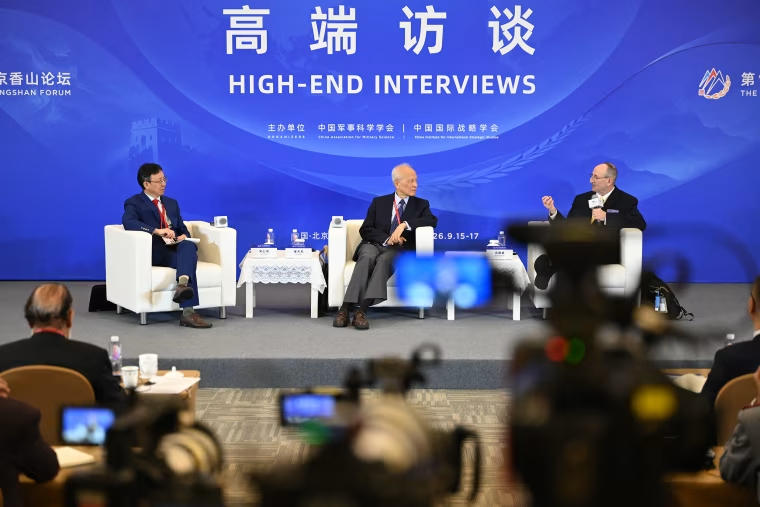
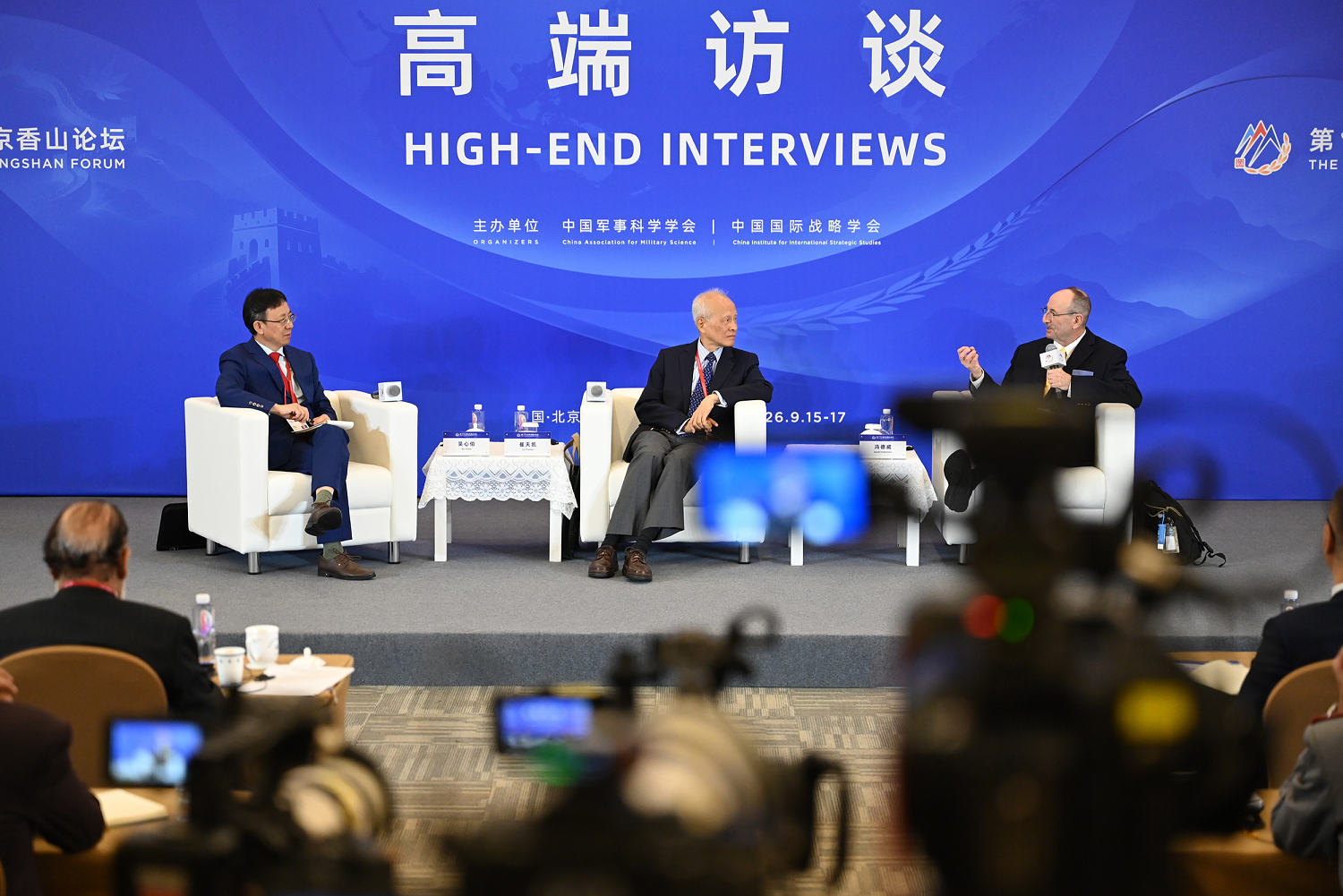
Experts say the US-China dynamic is trapped in a zero-sum mindset. Francesca Giovannini, executive director of Harvard’s Belfer Center, argues that Washington’s belief that any concession is a loss prevents meaningful engagement. Wu Xinbo, dean of Fudan University, says China is wary that talks could be used to slow its progress, but he acknowledges that both sides need to discuss AI risks.
Colonel Zhu Qichao of the PLA National University of Defense Technology has publicly called for cooperation and warned against vicious competition. Yet the structural barriers are immense. AI has military implications, from targeting to integration into nuclear command systems—a prospect David Finkelstein of the Center for Naval Analyses calls “scary.” He believes the two sides should talk.
David Santoro, president of Pacific Forum International, sees competition as inevitable but negotiation as possible. He is not optimistic about a major agreement soon. Others suggest a crisis—perhaps comparable to the 1962 Cuban missile crisis—might be needed to force real cooperation.
George Chen, a partner at the Asia Group, says China will not slow its AI development at America’s behest. “We do AI at our own pace,” he said, adding that China is proud of its chance to lead.
The Summit’s Stakes

As Trump and Xi prepare to meet, the question is whether they can find any common ground on AI safety. Both sides have reasons to talk: the technology is advancing rapidly, and the risks—whether from accidents, misuse, or military escalation—are real. But with trust at a low ebb, the Washington summit may produce more rhetoric than results.
For now, the world’s two AI superpowers remain locked in a dance of suspicion, each convinced the other’s motives are impure. Until that changes, meaningful cooperation on AI safety will remain out of reach.