
Just two years ago, as much of the nation saw historic drops in crime, Birmingham was enduring its deadliest year since the 1930s. The Alabama city recorded 153 homicides in 12 months, a rate roughly double that of Detroit or Chicago and nearly three times that of Philadelphia. But the city’s struggle with violence is not new—it stretches back to its founding, even before it earned the nickname “Magic City.”
Birmingham’s population boomed in the late 1800s and early 1900s, when it surpassed Atlanta as the South’s hub for coal, iron, and steel. That rapid growth, however, came with harsh mining and mill conditions, racism, and poverty. Through the Civil Rights Movement—the bombing of the 16th Street Baptist Church, Bull Connor, Martin Luther King Jr.’s Letter from a Birmingham Jail—the structural drivers of violence persisted.
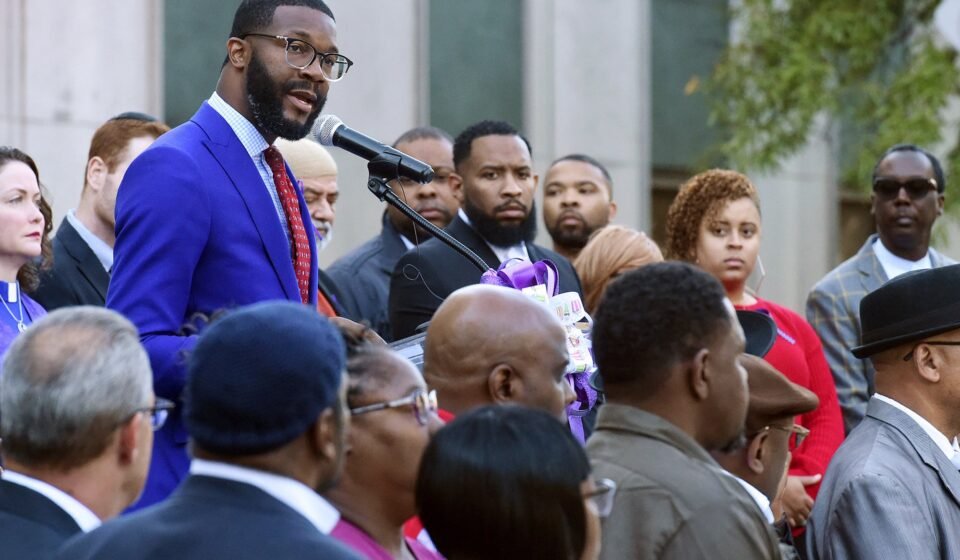
Mayor Randall Woodfin knows this history well. Elected in 2017 on a public safety platform during another surge in shootings, he has also felt the toll personally: he lost his brother, nephew, and brother-in-law to gun violence. Now, he sees reason for hope. Last year, Birmingham recorded fewer than 100 homicides for the first time in a decade. In the first six months of this year, the city saw just 24 homicides—down 70 percent from the same period in 2024, when there had been 80 by mid-year, and down 35 percent from 2025. That trajectory suggests not just a return to normal, but one of the lowest homicide rates on record.
In a recent interview, Woodfin discussed the city’s approach—from police staffing and clearance rates to conflict mediation in schools and violence intervention in hospitals. The conversation has been edited for length and clarity.
What’s Driving the Decline?
When crime peaked in 2024—higher than at any point since at least 1933—Woodfin says there was no choice but to act. “We put everybody in the room,” he explains. That included corporate leaders, small-business owners, community activists, faith leaders, educators, and others. A commission formed to recommend safety measures returned 82 suggestions, and the city has acted on more than two-thirds in under two years.
During that period, crime—both against persons and property—has dropped dramatically. The city drew $16.1 million from its reserve account for a police recruitment and retention plan, and now has a full force at 100 percent of budgeted officers. A new police chief, Michael Pickett, was hired, bringing leadership that Woodfin says boosts morale and ensures officers have the resources, technology, and vehicles they need.
Equally important, Birmingham invested in community violence initiatives, partnering with the health department—which declared gun violence a public health crisis—and the University of Alabama at Birmingham Hospital, along with other organizations. These groups focus on conflict resolution, dispute intervention, and de-escalation. “You can’t make communities safer just by taking guns out of people’s hands,” Woodfin says. “You also have to put a job back in their hands, and you have to make their neighborhoods cleaner and safer.”
But the most powerful factor, he says, is resident engagement. “Government alone will never be solely responsible for decreasing crime,” he notes. Residents called 911, joined neighborhood watch programs, contacted Crime Stoppers, and participated in Birmingham Connect, which feeds exterior home cameras into the city’s real-time crime center.
Focused Deterrence and Hotspot Policing
The city’s strategy includes focused deterrence, hotspot policing, and data-driven approaches. “The No. 1 and most important thing you can do is take criminals off the street,” Woodfin says. Thorough investigations, arrests, and partnership with the district attorney’s office are essential. “People who are hell-bent on shooting people, doing drive-bys, murdering people, and committing gun violence cannot be committing that kind of harm.”
Birmingham, with 200,000 residents across 23 communities and 99 neighborhoods, has identified specific hotspots. The approach there is not just saturation with police presence but also seeding resources for community development, infrastructure upgrades, family support, and education. “It was a holistic approach with wraparound services, not just police going in alone,” he explains.
Place-Based Revitalization
Research shows that greening spaces and removing blight can reduce violence. Woodfin says this is playing out in Birmingham. “I believe a lot of behavior is based on place,” he says. Over eight years, the city has spent $25 million in public tax dollars on private property to remove blight and overgrown lots—a significant investment for a city its size. “Part of stabilization requires removing things that are not only eyesores but also give the visual impression that people or government do not care.”
Personal Lessons and the Human Toll
Woodfin has learned that “gun violence is stubborn.” Having lost his brother, nephew, and brother-in-law within the last 14 years—his brother-in-law most recently in 2025—he remembers “the scream my mother cried out.” That same scream, he says, he has heard too many times from other mothers since becoming mayor. “I’ve never lost sight of making sure that I do everything necessary to have fewer mothers make that scream—or, ideally, no mothers make that scream.”
He also emphasizes that “one homicide is too many.” The city has reached a clearance rate of more than 90 percent, meaning that if someone is killed in Birmingham, police make an arrest. “Perception and reputation are two intangibles that are part of this public safety conversation,” he says. “If you commit gun violence, we are coming after you, and you will be held accountable.”
Community-Based Intervention Now
Since 2021, Birmingham has expanded its community-based intervention work. The city invested in conflict resolution in schools, which Woodfin calls “the long game.” The goal is to teach younger generations to handle conflict differently—whether it’s disrespect, social media posts, or disputes. The school system has seen fewer infractions, suspensions, expulsions, and fights. “These are some of the same young people involved when crime spikes in the summer,” he notes.
On the adult side, a program with Offender Alumni, UAB, and the admissions team has been powerful. People admitted after a gunshot who participate have not reoffended, been shot again, or killed someone. The program is now expanding into the emergency room. Street teams also play a role, going in after a shooting to de-escalate conflicts and reach residents in places where elected officials can’t or shouldn’t.
Funding Beyond Federal Aid
As federal American Rescue Plan funds end, Birmingham has found other ways to support these programs. Last year, the city allocated $1.5 million from its general fund for community-based intervention—the first time it did so. This fiscal year, which began July 1, 2026, that funding doubled to $3 million. It has its own budget, intentionally separate from the mayor’s office and police department. “We want to measure and track daily, weekly, and monthly tangible positive results,” Woodfin says. Organizations that produce results see funding maintained or increased; those that don’t see it decrease or go to zero.
Federal and State Roles
While the Trump administration has taken credit for national declines in violence, Woodfin is clear: “In the city of Birmingham, we did this with our local effort, our local leadership, and a local approach.” The federal and state governments are partners on economic development, infrastructure, and public safety, but for this work, “we didn’t have intervention or support from anybody else.” He notes that discussions about bringing in the National Guard were unwelcome. “We empowered ourselves locally and took charge locally.”
Credit, he says, belongs to the mother or grandmother who called 911, the witness who testified, the anonymous community member who called Crime Stoppers, and the beat officers, investigators, police chief, and community violence organizations.
As a nonpartisan mayor, Woodfin says public safety is not a Democrat-Republican issue but a quality-of-life issue. The state has helped at times—for example, passing a law that made exhibition driving illegal, which correlated with car thefts and stolen guns, and a Glock switch law. But the state also removed the requirement for concealed carry pistol permits, which police opposed. “That was a struggle,” he admits. Still, he says, “On balance, things have worked when we’ve come together to partner with the state.”
Hope for the Future
Woodfin is hopeful that Birmingham can sustain its progress. “The way to maintain the perception that the city is safer is to make the reality that the city is safer,” he says. “Our reality is that the city is much safer in 2026 compared with 2024.” He stresses the need for sustained resources, commitment, and resident empowerment. “We know public safety works in waves,” he says, “but a sustained effort, sustained resources, sustained commitment from leadership and organizations, and people continuing to feel empowered is how we sustain both the tangible reality and the perception.”
Gun violence is often viewed as intractable, but the evidence shows otherwise. The positive trends in Birmingham also underscore challenges ahead. On September 22 in Washington, D.C., The Trace will host Safer Together 2026, a forum on the next frontiers for ending gun violence, featuring senior leaders and scholars offering different perspectives on solutions.