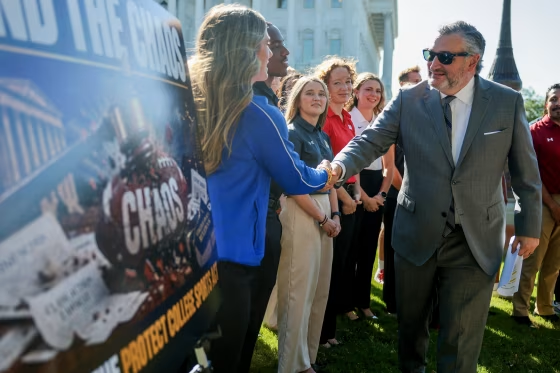

Senators voted 74-24 on Tuesday to push forward the Protect College Sports Act, a bipartisan measure that would install a single national rulebook for college athletics. The procedural motion needed 60 votes to succeed, and the comfortable margin suggests the bill has real momentum — though its path to final passage remains unsettled.
The legislation, introduced this year by Sen. Ted Cruz, R-Texas, and Sen. Maria Cantwell, D-Wash., would set federal standards for athlete eligibility, how often players can transfer, and the compensation they can receive. It would also hand the NCAA a coveted antitrust exemption, shielding the association from future lawsuits over its rules.
What the Bill Would Do
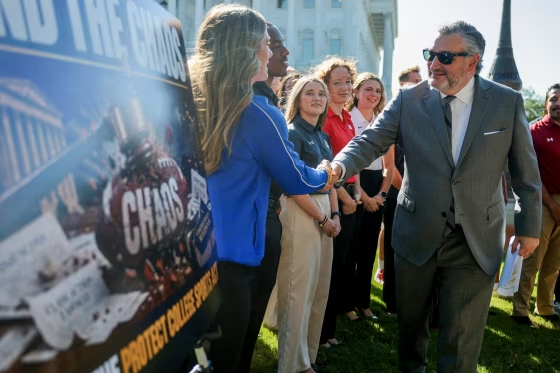
At its core, the Protect College Sports Act is an attempt to replace a patchwork of state court rulings and injunctions with one set of rules that apply everywhere. In recent years, those court decisions have reshaped the college sports landscape: athletes can now transfer freely and earn direct compensation for their name, , and likeness. The NCAA has spent years lobbying Congress for exactly this kind of sweeping federal law, arguing that without it, the rules will keep shifting from one courtroom to the next.
The antitrust exemption is the bill’s most consequential — and most contested — provision. It would prevent future legal challenges to NCAA rules, much like the exemptions that protect the NFL and NBA. But there’s a key difference: professional athletes in those leagues negotiate their rules through collective bargaining. College athletes have no union, which critics say leaves them without a seat at the table.
Support and Opposition

The NCAA backs the bill, and Gonzaga men’s basketball coach Mark Few has said it isn’t perfect but represents the best option available. Cruz promoted the measure recently on ESPN’s College GameDay, while Cantwell joined him at a news conference in Washington on Monday.
Not everyone is on board. Sen. Chris Murphy, D-Conn., has emerged as a leading voice against the bill. He argues it protects the billions of dollars flowing to coaches and executives while suppressing compensation for the athletes who generate that revenue. Murphy also warns the measure would allow illegal collusion by colleges, conferences, and the NCAA. He made his case on Stephen A. Smith’s podcast, Straight Shooter.
Outside Congress, the Congressional Black Caucus and the NAACP both oppose the legislation. Athlete advocates point to a potential loophole that could let schools avoid accountability for violations — including, they say, cases involving sexual abuse.
What Comes Next
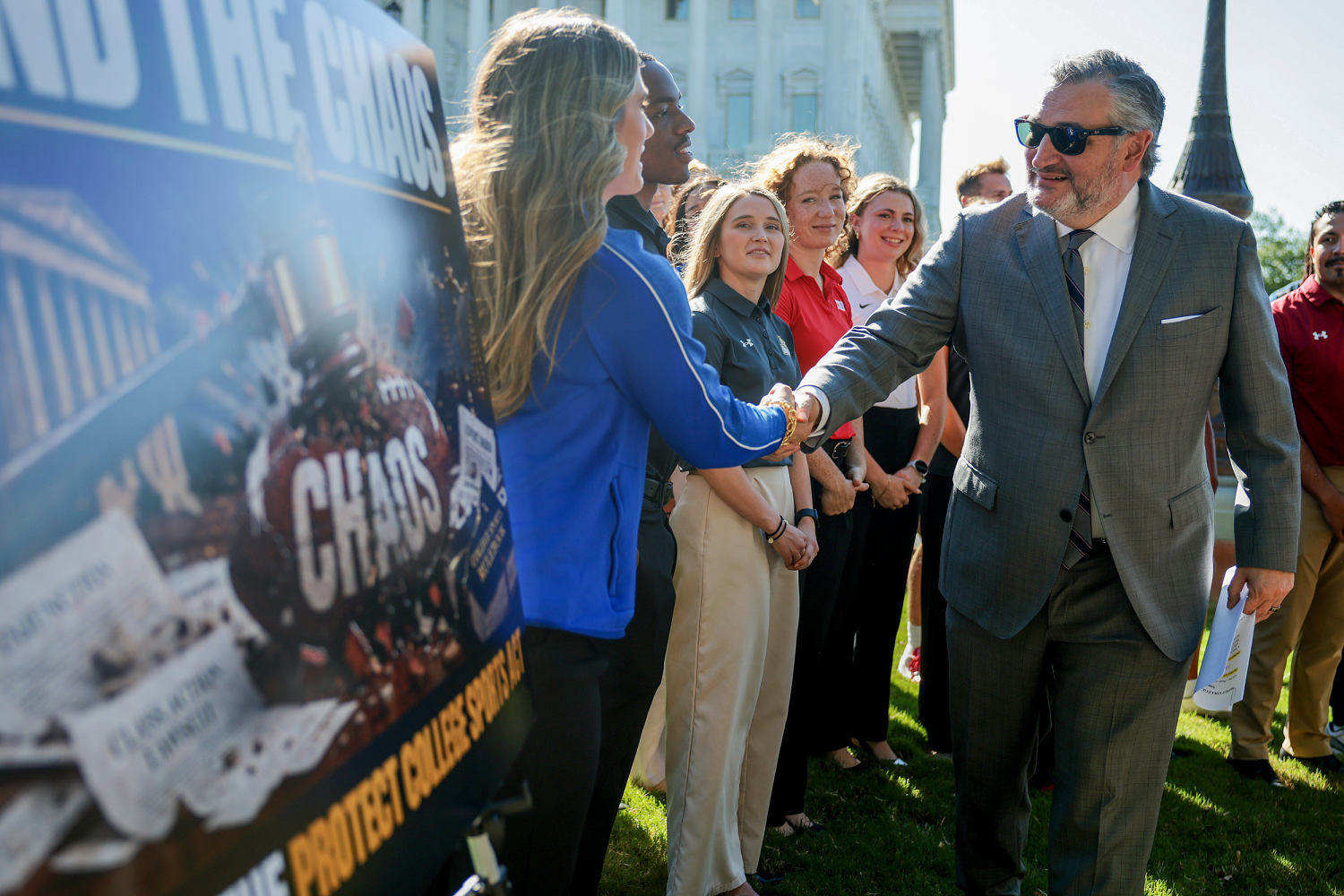
The Senate still has to hold a final vote, and the timing for that remains unclear. Even if it passes, the bill would need approval from the House before it could become law. For now, the 74-24 procedural vote is a signal that a majority of senators want to keep the bill alive — and that the fight over how college sports should be governed is far from over.