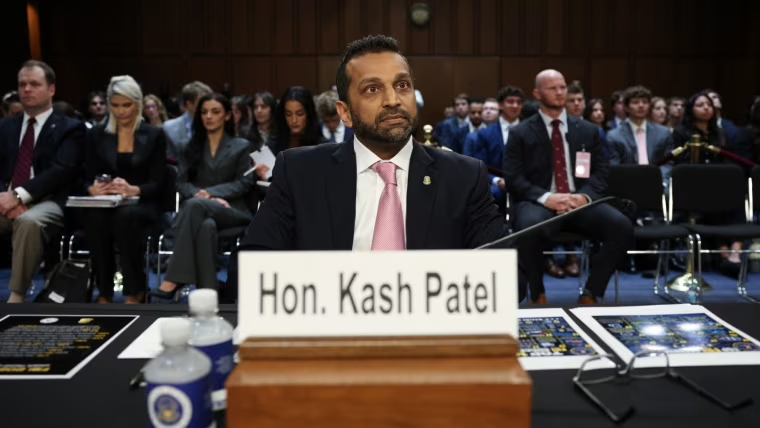

FBI Director Kash Patel appeared before the Senate Judiciary Committee on Tuesday for a long-awaited oversight hearing that quickly turned combative, with Democratic senators pressing him on a wave of bureau firings, a leak probe that reached into his own conduct, and his unusual $250 million defamation lawsuit against The Atlantic magazine. Republicans, meanwhile, used their time to air grievances about what they call the weaponization of federal law enforcement under previous administrations.
A Hearing Defined by Fireworks
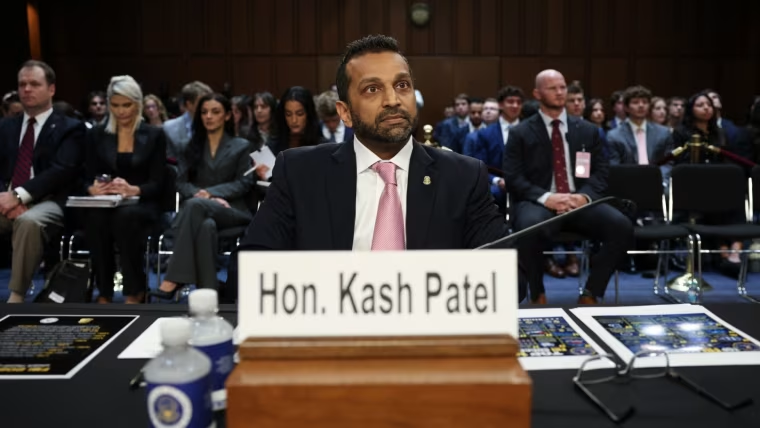
The session in Washington laid bare the deep partisan divide over Patel’s leadership since he took the helm of the FBI. Democrats on the panel—including Senators Dick Durbin of Illinois and Cory Booker of New Jersey—did not hold back. Booker at one point described Patel as a “thug,” accused him of deploying the bureau against journalists, and said he was stonewalling Congress. Durbin, who is not seeking re-election this year, said he was disappointed that the committee had not done more to hold Patel accountable, and noted that this would likely be his final FBI oversight hearing.
Patel, for his part, largely absorbed the criticism and at one point asked committee chairman Chuck Grassley, Republican of Iowa, to wrap up the proceedings. “I would appreciate hearing concluded,” he said, according to the brief. The request came as the hearing stretched on and tensions remained high.
Firings and a Leak Investigation
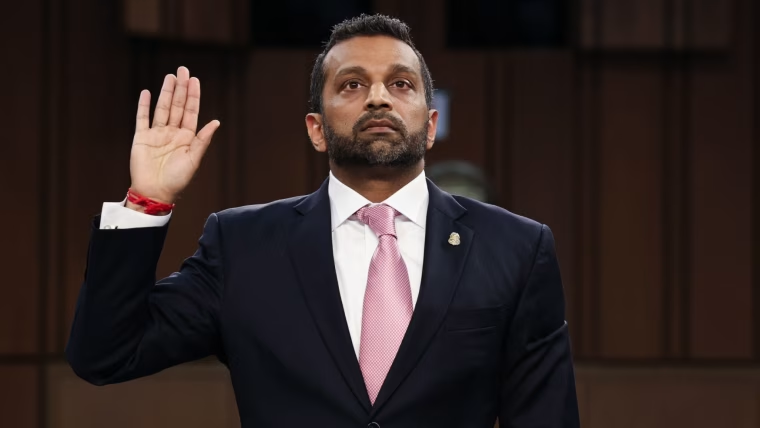
Much of the Democratic questioning focused on the FBI’s personnel shake-up. Since President Donald Trump returned to office in January 2025, the bureau has seen a series of firings and departures, including employees who had worked on investigations tied to Trump. Among those let go were individuals involved in the 2022 search of Mar-a-Lago, the Florida estate where classified documents were recovered. Patel’s FBI also oversaw the removal of personnel who had participated in prior Trump-related probes.
Democrats also zeroed in on a leak investigation that they say led to an Atlantic story detailing Patel’s personal behavior. Patel has denied wrongdoing and his team has said he does not drink to excess. In April, Patel filed a $250 million lawsuit against The Atlantic over its reporting. The lawsuit and the leak probe became flashpoints during the hearing, with Democrats suggesting that Patel was using the FBI to retaliate against the press.
Republican Support and Grievances

Republicans on the committee largely praised Patel’s performance and steered the conversation toward their own concerns about the Justice Department and FBI under previous leadership. They complained that former special counsel Jack Smith obtained phone records belonging to legislators during his investigation into the January 6, 2021, Capitol riot and efforts to overturn the 2020 election. That investigation, Republicans argued, exemplified the politicization of law enforcement.
They also highlighted the recent resignation of Joe diGenova, an 81-year-old Trump loyalist who had been heading a probe targeting former officials involved in Trump investigations. DiGenova stepped down last week after a conflict with Justice Department leadership over the direction of the investigation. In comments before his departure, diGenova said Patel had been “absolutely superb” in supporting the probe.
An FBI Under the Microscope
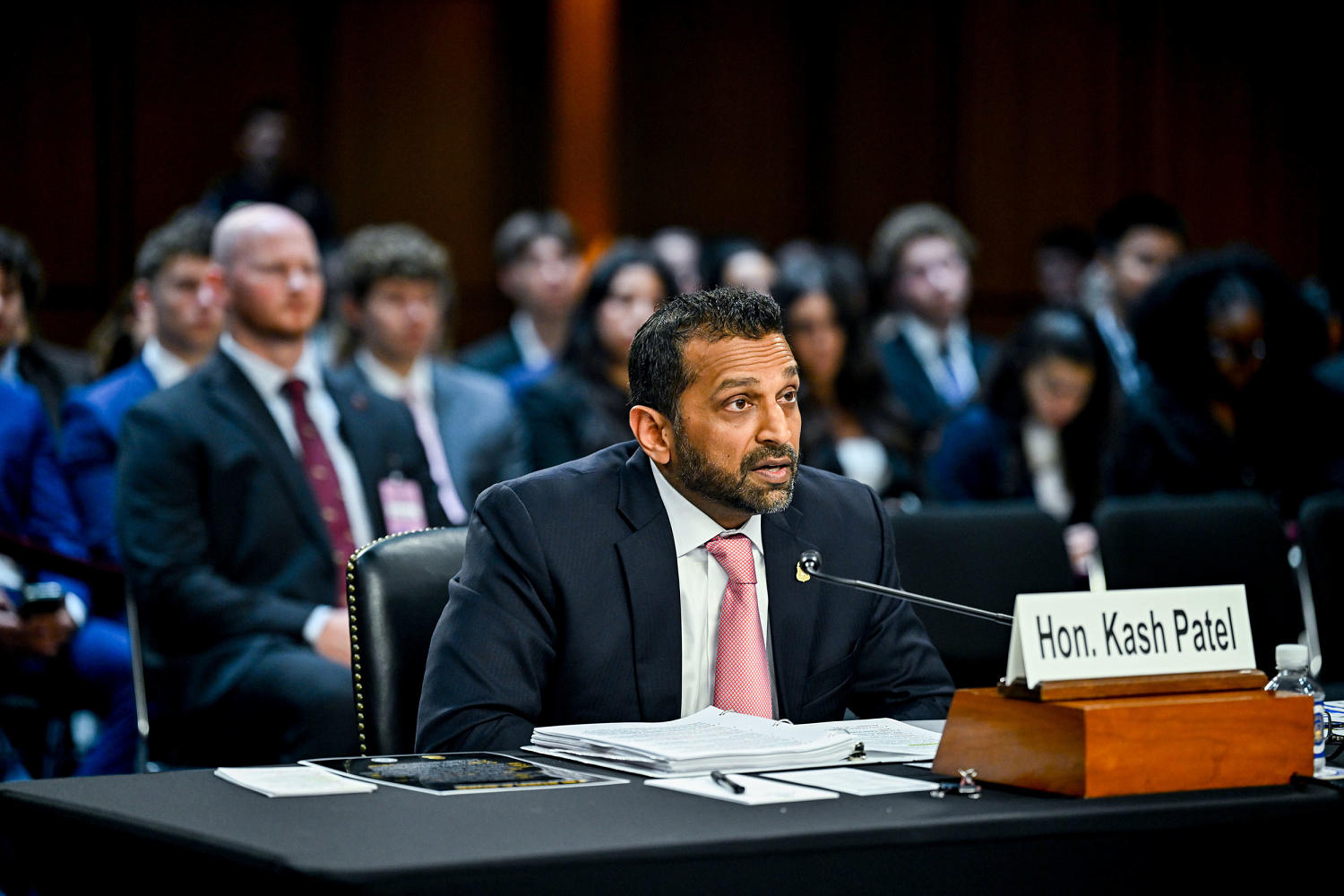
The hearing underscored the extent to which the FBI has been transformed since Trump’s second term began. The bureau’s X account even attacked several committee members during the hearing, a rare public broadside from an official government account. Patel’s stewardship has drawn intense scrutiny, and Democrats made clear they expect to continue investigating if they win control of Congress.
For now, the hearing ended with Patel asking to adjourn and Democrats vowing to keep up the pressure. Durbin said he looks forward to the committee holding Patel accountable in the future. Whether that happens may depend on the outcome of the next election—and on how the FBI’s role evolves in the meantime.